
"Delay becoming butterflies"
More-than-human wisdom from the morpho azul

Always seen flying
Delay becoming butterflies
La morpho azul.
-My tattoo haiku
Hello, dear reader!
Prism of Wisdom, as we describe it, is a portal. From our tagline:
Together, may we be like the prism… slowing down to bend our assumption about wisdom, so that we may perceive the spectrum of wisdom that collectively call each of us home to our unique multi-dimensionality and interbeingness.
We (Minna and I) often write about dreams, since community dreamwork is a core practice we share and was the initial spark and ongoing foundation of our collaboration. But we chose the name Prism of Wisdom with the intention of leaving space open to write beyond dreams, inclusive of this multi-dimensional spectrum of wisdom beyond the rational/intellectual, beyond the seen towards the unseen.
Today’s post is inspired by more-than-human wisdom. Butterfly wisdom. The blue morpho, particularly.
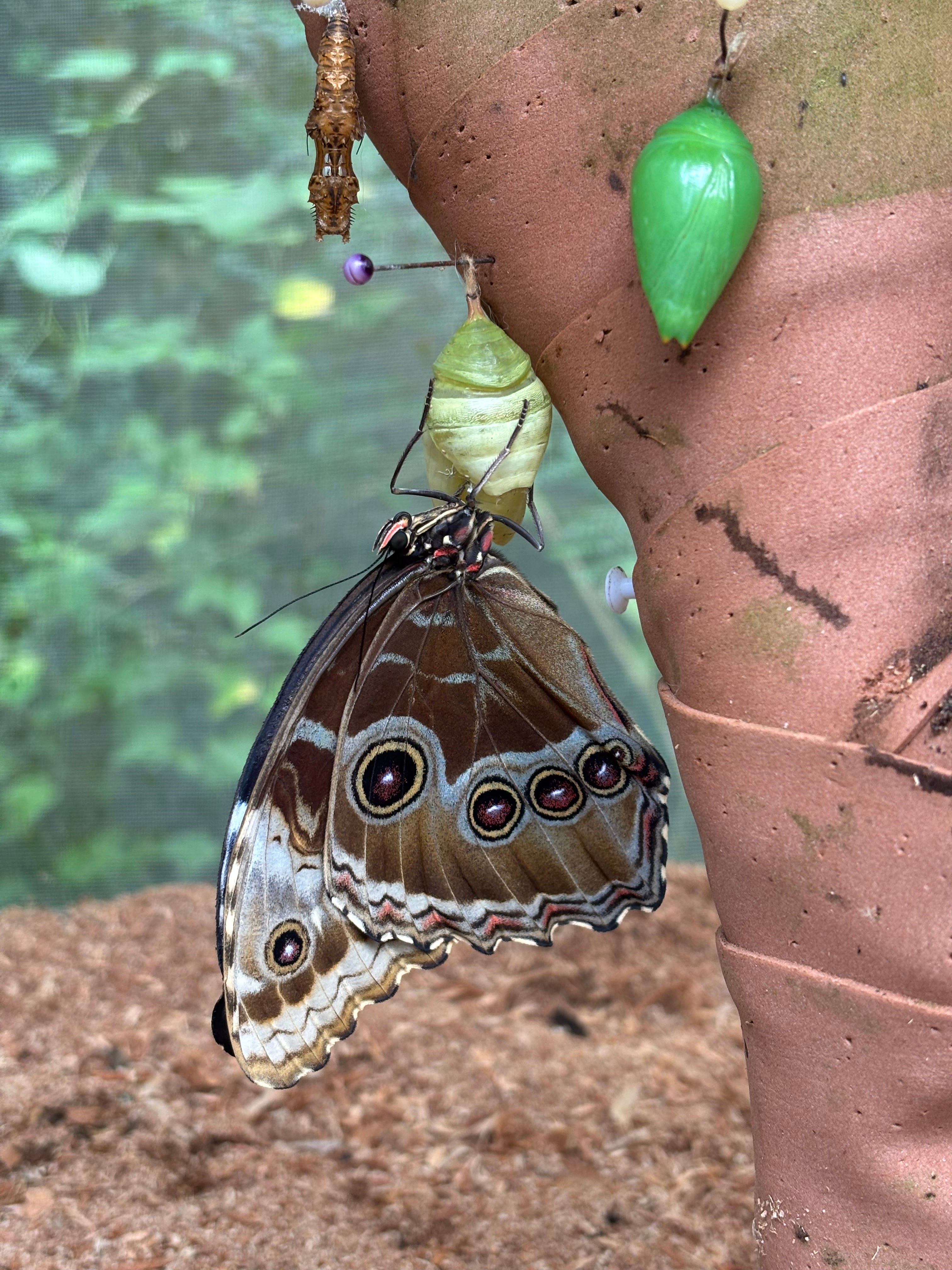
This weekend, I got a morpho tattooed on my arm. It might have seemed spontaneous to those on the outside, but I am always on the verge of getting a new tattoo (I have 7 total now, over the span of 20 years, I realized as I sat in the tattoo parlour chair). When I learned I had babysitter time for a few hours on the weekend, I asked myself the question, “What act of self-care could I make during this window of time?” Tattoo is where I landed.
If you were to respond to this prompt:
I am always on the verge of…
how would you complete that sentence?
For me, it’s:
I’m always on the verge of adopting another dog.
I’m always on the verge of getting another tattoo.
So there is almost always a tattoo idea - or a yearning for one - floating around inside me. For me, tattoos are a source of joy and beauty, and a spiritual practice of risk, trust, non-attachment, and impermanence¹, thus an act of self-care.
The blue morphos live in the peace park near my office, and I am lucky that I can see them flutter by often (they do not come to the office - they like to be in and around the forest). They are the national butterfly of Costa Rica (do other countries have national butterflies? I feel like it tells you a lot about Costa Rica and what it values that it does). Part of my yearning for a morpho tattoo was to mark my life in Costa Rica.
It was also to honor the significant moments around butterflies I have had with my students. In one of our class reflection exercises, one student wrote an exquisite poem called “We will all be butterflies,” which I will always treasure. As an act of learning from more-than-human teachers in our peace education class, we spent a morning at a mariposario - a butterfly conservatory - which was one of our most beautiful, magical days together of the year. And of course, butterflies are a symbol of transformation, imagination (we talked about imaginal cells in class), and the way our actions can impact across the world and the interconnectedness of all things, through one beat of butterfly wings - all things we talk a lot about and practice with in peace education.
Thus, for a while, I knew my next tattoo would have to be a butterfly, and a blue morpho specifically. La morpho azul.
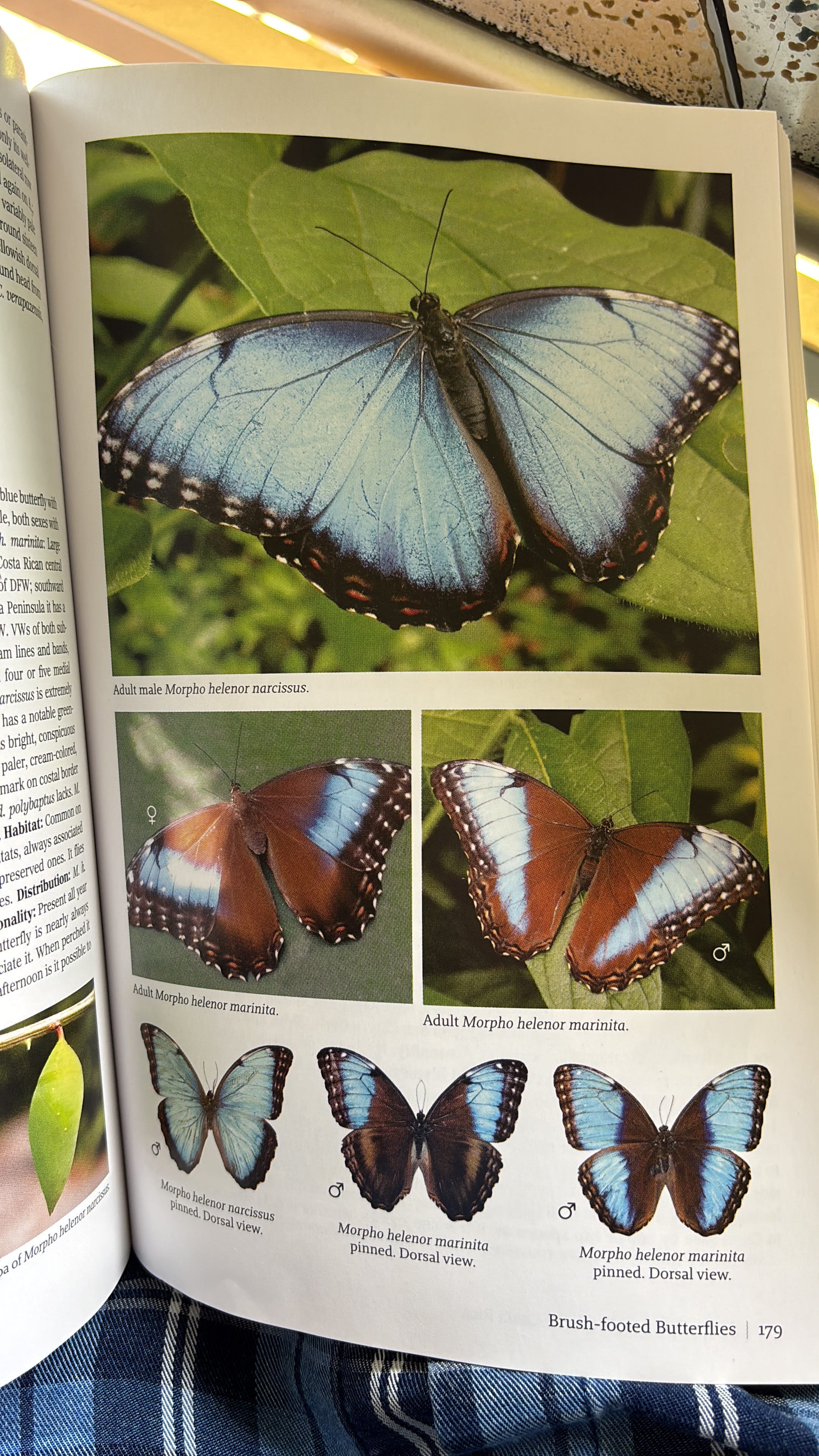
In the few days leading up to the appointment, I was doing more research into morphos. In the field guide Butterflies and Moths of Cosa Rica by Luis Ricardo Murillo-Hiller (2025), I learned a few fun facts:
“The morpho butterfly is nearly always seen flying, making no stops, giving an observer just a few seconds to appreciate it. When perched, it is seldom seen, thanks to its great camouflage…
…mature larvae of the dry forest population decrease their metabolism during dry season and eat only very small pieces of leaves each day. In this way, they use less water from already dehydrated leaves, save the host plant’s few remaining leaves, and delay becoming butterflies, thus avoiding adverse weather” (Murillo-Hiller, 2025, p. 178-180, emphasis added).
How incredible is that?! Through controlling their metabolism, they can delay becoming butterflies.
This makes me think of our own metabolism, our role in the wider earth’s metabolism, and how we might be able to intentionally control our own metabolic rate to be in better harmony with the earth. No, I am not referring to what we eat (although that would certainly be part of it - for example, eating less meat which consumes a lot of ecological resources), but I am talking more what we consume on all levels (energy, for example). Might the morpho have something to teach us in terms of how they adjust their metabolism to their ecological conditions?
In their work, the Gesturing Towards Decolonial Futures Collective refers to their decolonial approach as “meta-critical” and metabolic,” which they describe in the following way:
"If we take seriously the idea that decolonization is not metaphor, then we must also take seriously that it is not a process of pruning the existing world into a more palatable shape. It is about composting what no longer serves, creating space for something beyond what we can currently recognize.
Rather than securing a place in modernity’s failing institutions, rather than competing for epistemic authority, rather than seeking to “win” the battle for representation within systems that are already collapsing, a metabolic approach asks:
What are we feeding?
What are we willing to let rot?
How do we prepare for what comes next—not by controlling it, but by learning how to hold space for the unknowable?”1
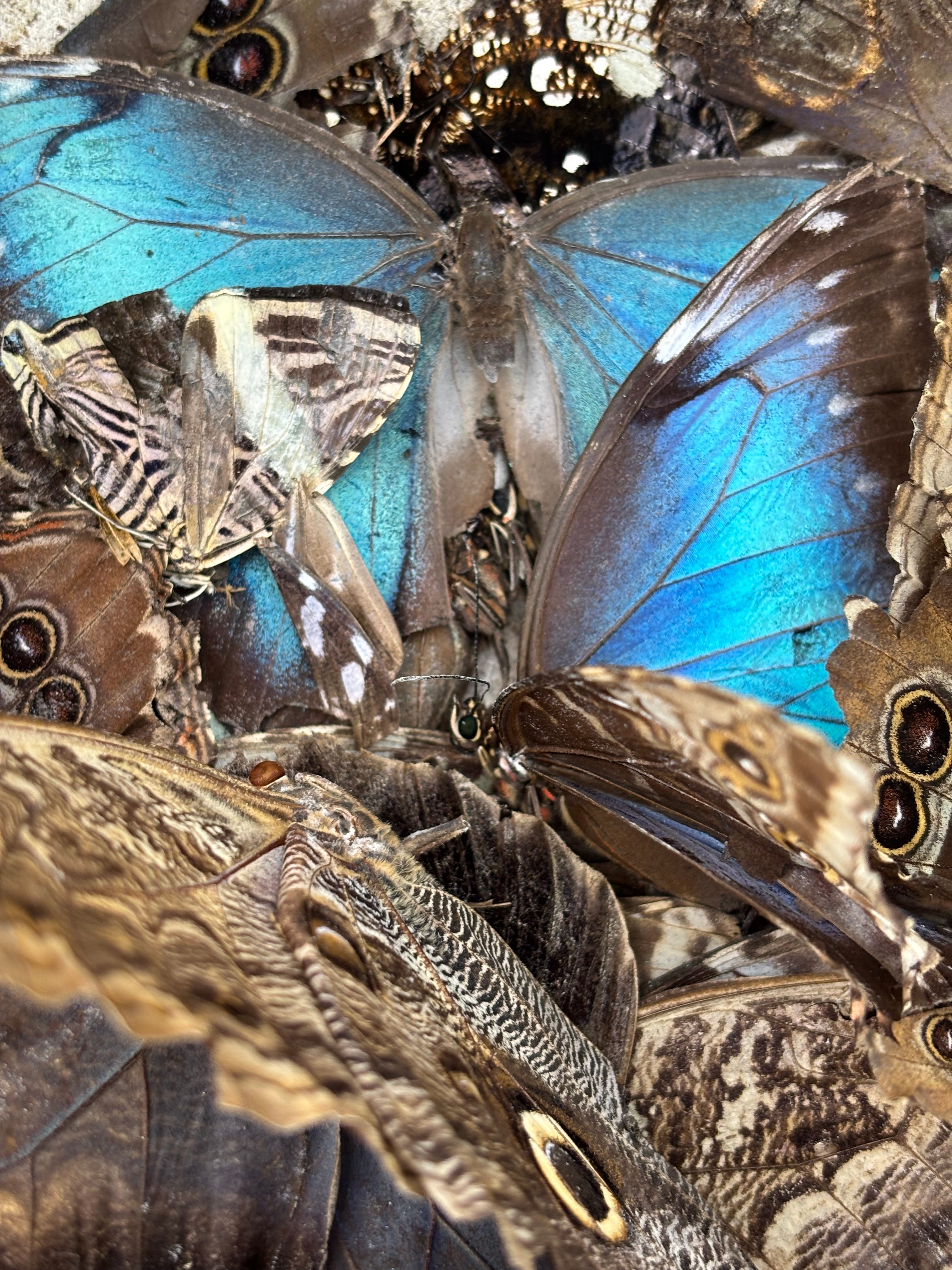
I am inspired by the morpho azul in its capacity to decrease its metabolism and delay becoming a butterfly to better respond to its ecological conditions. I wonder how we might do the same.
I had the tattoo placed on my forearm, just above the elbow crease, as a visible reminder of the more-than-human beauty and wisdom that is available to us at all times, and that life wants us to collaborate with us. Life is waiting for us to be good collaborators. We just have to answer the call.
Here’s to ongoing learning and inspiration from our more-than-human companions, and to finding ways as humans to become better aligned with the earth’s metabolism.
-Stephanie
Stephanie Knox Steiner, PhD is an enchantress, mother-scholar, dreamworker, community weaver, professor, and peace educator who currently lives and teaches at the University for Peace in Costa Rica. She has been writing down her dreams since she was a teenager, and studied community dreamwork as part of her doctoral studies at Pacifica Graduate Institute. She writes prolifically about enchantment, interbeing, and re-imagining education at her other Substack, Enchantable.
https://decolonialfutures.net/gtdf-decolonial-work/
🦋🦋🦋